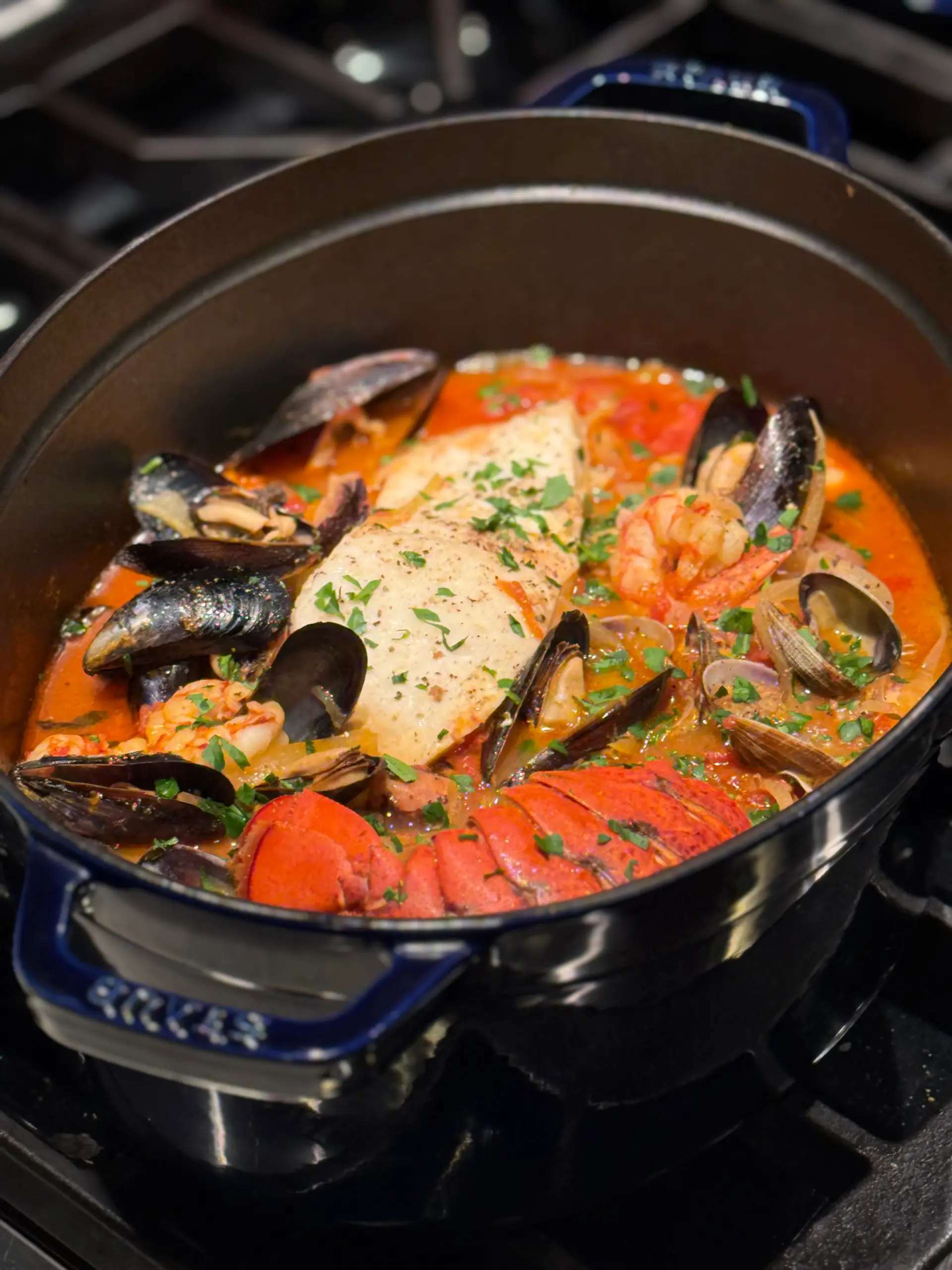
San Francisco Cioppino: Seafood Stew
San Francisco Cioppino: Seafood Stew
Ingredients
Cooking time: 45 min.
Preparation time: 20 min.
Total Time: 65 min.
Servings: 0
Prevents your screen from going dark.
2 tablespoons olive oil
1 yellow onion large, thinly sliced (about 1 ½ cups)
1 cup fennel thinly sliced
3 cloves garlic thinly sliced
pinch red chili flakes
1 bay leaf
1 sprig fresh thyme substitute ¼ teaspoon dried
1 sprig fresh oregano substitute ¼ teaspoon dried
1 tablespoon tomato paste
¾ cup dry white wine
1 cup bottled clam juice
1 can whole peeled tomatoes 28-ounce can
salt and pepper to taste
25 littleneck clams scrubbed
½ lb mussels scrubbed and debearded
½ lb shrimp 16/20 count, shell on
½ lb king crab legs cracked and broken into large pieces
½ lb firm white fish such as halibut, cod, sea bass or barramundi, cut into large pieces
3 tablespoons butter unsalted, cut into pieces
2 tablespoons fresh parsley finely minced
crusty bread for serving
Preparation
Heat olive oil in a large heavy-bottomed pot or dutch oven over medium heat. Add the onions and fennel and sauté until translucent, about 8 minutes.
Add the garlic, chili flakes, bay leaf, thyme, and oregano, then sauté for another 2-3 minutes.
Add the tomato paste and stir until incorporated, then season lightly with salt and pepper. Go easy on the seasoning for now, as the seafood will add a significant of salt.
Add the white wine and clam juice, then bring up to a simmer and cook for about 5 minutes.
Add the canned tomatoes and break them up a bit with a wooden spoon. Cover and simmer over low heat for 20 minutes.
Remove the lid and add the mussels and clams. Stir them around to coat with the broth, then cover and let cook for about 5 minutes.
When they just begin to open, add the shrimp and king crab and toss around to coat, then lay the fish fillets on top.
Season the fish pieces with salt and pepper, then cover and cook for an additional 3-5 minutes, or until the shrimp and fish are opaque throughout.
Turn off the heat and stir in the butter until incorporated. Taste the broth and add more salt and pepper if needed.
Sprinkle with parsley and serve immediately with lots of crusty bread on the side for dipping.
Since the seafood adds a lot of natural saltiness to this dish, be careful not to add too much salt when seasoning. Go light with the sea salt until the end when you can taste it and decide if it needs more.
The order of adding the seafood to the pot is important so that it all cooks perfectly.
The key to a great cioppino is serving it right when the fish is cooked. The fish and shellfish only need a few minutes to cook, and overcooking will make it tough and dry instead of tender and succulent seafood.
Swap any of the seafood for more of your favorites. This dish is very customizable, so add more or less seafood as you wish!